




Why are kites flown during Sankranthi, and what does it symbolize?
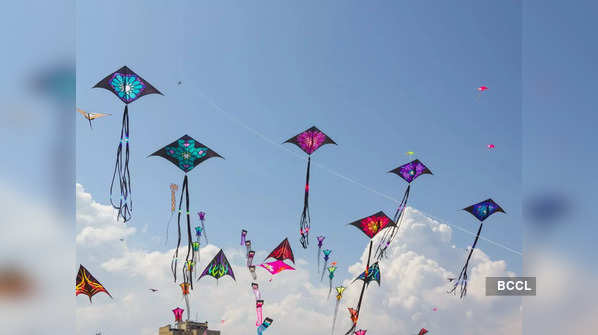 The Story of how Kite flying became associated with Sankranti
Makar Sankranti, a vibrant and joyous festival celebrated across India, marks the transition of the sun into the zodiac sign of Capricorn or Makar. This auspicious day, observed on January 14th every year, is not just a date on the calendar but a cultural extravaganza that resonates with diverse customs and traditions. Among the many rituals associated with Makar Sankranti, the soaring kites against the azure sky have become an iconic symbol of this festival. In this blog, we reveal the fascinating story of how kite flying became an integral part of Makar Sankranti celebrations.
The major reason for flying kites on Makar Sankranti is related to the Hindu religion and mythology. Makar Sankranti is dedicated to the worship of Surya, the sun god, who is considered to be the source of life and energy. Flying kites is a way of expressing gratitude and devotion to the sun god, and also symbolizes the ascent of the sun and the end of the winter solstice. Some people also believe that flying kites helps the soul of the deceased to reach heaven, as the kites are seen as a medium of communication between the earth and the sky.
The association of kite flying with Makar Sankranti is deeply rooted in the belief that the higher the kite soars, the closer it gets to the divine, capturing the essence of the festival's spiritual significance.
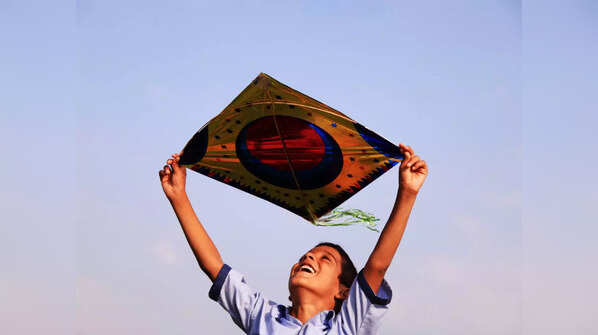
According to some experts, the tradition of flying kites on Makar Sankranti has a scientific reason behind it. The festival falls in the winter season, when the weather is cold and dry, and people are prone to infections and illnesses. Flying kites exposes the body to the sun’s rays, which are believed to have healing and cleansing properties. The sun’s rays also stimulate the production of vitamin D, which boosts the immune system and prevents diseases. Moreover, flying kites also involves physical activity, which improves blood circulation and keeps the body warm.
The rhythmic swaying of colorful kites in the sky became an integral part of Makar Sankranti festivities, symbolizing the joyous spirit of the changing seasons and the advent of warmer days.
In many regions of India, Makar Sankranti is marked by spirited kite flying competitions, adding an element of excitement and skill to the festivities. Participants showcase their kite-flying prowess, aiming to cut the strings of their opponents' kites in a friendly yet competitive environment. These competitions not only bring communities together but also foster a sense of camaraderie, with participants sharing tips, tricks, and stories while engaging in the exhilarating pursuit of mastering the art of kite flying.
While the association between kite flying and Makar Sankranti is widespread across India, each region adds its own
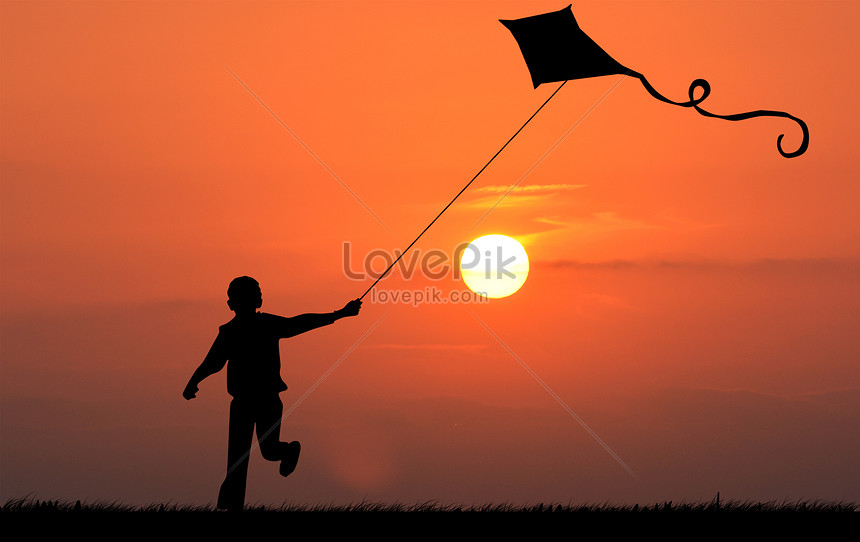 unique flavor to the tradition. In Telangana, the Kite Festival attracts enthusiasts from around the world, showcasing a breathtaking display of kites in various shapes and sizes and people engage in friendly kite-flying battles, showcasing the rich cultural diversity that defines Makar Sankranti celebrations across the country.
Here is a view on various shapes and sizes of patangs flown according to Telangana culture:
Namam Chukka is called so because it has a 'namam' (sacred symbol) at the peak of the kite and a dot on its body.Latti Dhar is called so because it contains two designs adjacently.
Guddi Dhar is called so because it contains egg-like symbols at the center foot of the perpendicular of two sticks.
Naamam Langot contains two cross lines down the stick of the kite with a 'namam' at the peak.
Double Chukka Dhar contains two dots anywhere on the kite.
Dappan contains love symbols over the body on the left and right side of the stick.
CONCLUSION
Overall, kite flying during Sankranti is a blend of cultural, spiritual, and social significance. It represents a celebration of nature, a hope for a prosperous future, and a joyous occasion for families and communities to come together.

Prudhvi Boddeda
View Details
 Like
Like 22 Comments
 Repost

You may also like

EdGe: Your Academic Co-pilot
Published 7d+

Your Future Awaits: Finding Your Perfect Career Path After 12th Grade!
Hey there, 12th graders!The exams are wrapping up, and suddenly, everyone's asking, "What's next?" Choosing a career after 12th grade can feel like standing at a crossroads with a

EdGe: Your Academic Co-pilot
Published 7d+
The Complete Guide to Medical Specializations: From MBBS to DM/MCh
🩺 Undergraduate DegreeBachelor of Medicine & Bachelor of Surgery (MBBS)A 5½-year professional medical degree combining theoretical learning and clinical exposure. This is


Mula Lakshmi Prasanna
Published 7d+
My Journey through JEE Preparation: Books I Brought and Used
Introduction:Embarking on the journey of JEE preparation can be both exciting and overwhelming. As a student who went through this experience, I would like to share my insights on the books I brought


Kartikeya Kommanamanchi
Published 7d+
No excuses, Let's vote!
I have been in a dilemma for around one and a half months since the election schedules were announced, whether to go and vote, which is a big thing(for me), considering my exam is approaching(regardless

EdGe: Your Academic Co-pilot
Published 7d+
NEET
National Eligibility cum Entrance Test (NEET) is the only medical entrance test for the students aspiring to pursue medical courses (UG) in medical colleges in India. It will be conducted by

EdGe: Your Academic Co-pilot
Published 7d+
Navigating the JEE Landscape: A Guide to IITs, NITs, IIITs, and GFTIs!
Are you an aspiring engineer or a science enthusiast dreaming of a top-tier technical education in India? The JEE (Joint Entrance Examination) is your gateway to some of the most prestigious institutions

EdGe: Your Academic Co-pilot
Published 7d+
Top 20 Medical Colleges in India
India is home to some of the world’s finest medical institutions, both government and private, that admit students into MBBS and related undergraduate programs through the NEET (National Eligibility

EdGe: Your Academic Co-pilot
Published 7d+
Best Books for JEE Advanced – Toppers' Trusted List 📚
When it comes to JEE Advanced, your books need to go beyond basic NCERT and focus on depth, application, and problem-solving stamina. Here's a subject-wise breakdown with tiers


Dr. Ravi Saripalle
Published 7d+
Failure Conference!! Sounds Interesting!! You Heard Right!! Read This!
Failure Conference!! Sounds Interesting!! You Heard Right!! Read This!Dear Friends,Occasionally, we hear about Success Meets! Whether it’s an organization or an individual, success is generally


Vineel Kovvuri
Published 7d+
How to design Generic classes?
How to design Generic classes?This article talks about how to design Generic classes at a basic level. Beginners feel comfortable in using Generic classes but find it difficult when they have to


Bade Ramyasri
Published 7d+
The Timeless Legacy of Indian Mathematics
"Indian mathematics has always been a bridge between abstract thought and practical application, laying the foundation for the mathematical discoveries that shape our modern world."Indian

Dr. Ravi Saripalle
Published 7d+
Living in scarcity vs. Living in Abundance!!
Plenty but Purposeless results are Pathetic! Living in scarcity vs. Living in Abundance!! Read this perspectiveDear Friends and StudentA coupleuple of days back I received a LinkedIn message with the
Related Blogs

Venkatesh Panyam(PV Sir)
Published 7d+

Importance of Sankranthi
The Importance of Sankranthi: A Festival of Harvest and HarmonySankranthi, one of the most significant festivals in India, is a celebration of the harvest season and the transition of the Sun into


Vijay ram Moka
Published 7d+
How would you explain sankranthi to someone from a different culture?
SANKRANTHI IS AN DIFFERENT CULTURE:Sankranthi, also known as Makar Sankranti, is an Indian harvest festival celebrated in January, marking the transition of the sun into the zodiac sign Capricorn (Makara).


Chinmai Velega
Published 7d+
Historical origin of sankranthi
Sankranthi is also a harvest festival, celebrated to thank nature for its bounty and to mark the start of the agricultural season. It holds spiritual significance, as it is considered an auspicious time


Prajnagayatri bhogapurapu
Published 7d+
What are the Historical origins of Sankranthi?
The Historical Origins of Sankranthi: Introduction:𝘚𝘢𝘯𝘬𝘳𝘢𝘯𝘵𝘩𝘪, also known as 𝙈𝙖𝙠𝙖𝙧𝙖 𝙎𝙖𝙣𝙠𝙧𝙖𝙣𝙩𝙝𝙞, is one of the

K Sai Rohan
Published 7d+

What is the significance of Sankranthi, and why is it celebrated?
The Multifaceted Significance of Sankranti: A Celebration of Harvest, Sun, and CultureSankranti, celebrated across India and parts of South Asia under various regional names like Pongal, Makar


Nakshita ____ cutie
Published 7d+
What is the significance of Sankranthi, and why is it celebrated?
What is the significance of Sankranthi, and why is it celebrated?Makar Sankranti, also known as Maghi, Til Sankranti, Uttarayana, or Pongal, is a festival celebrated in India and Nepal that has multiple