




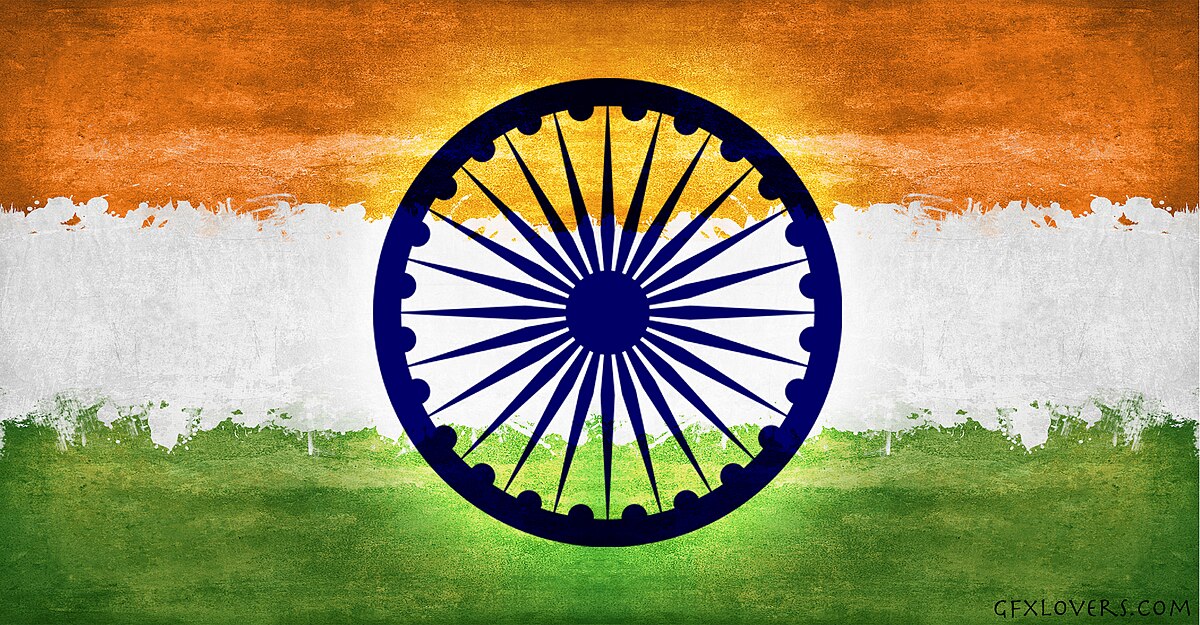

The Most Important Day for an Indian!
It is no surprise to boast that Independence Day is the most important day for Indians. It ought to be so for any person in the world if their country fought for Independence, especially from imperial/ tyrannical rule. So, let’s explore some of the crucial reasons to consider this day utmost important!
National Unity:
Our ancestors(grandparents for a few) indeed had the feelings of both happiness and pain at midnight when we finally achieved the fight for freedom that lasted for around two centuries. The immense pain was due to the partition of the country and the heart-wrenching massacre it brought upon the people. Unlike our neighbouring nation, which became a theocratic state(it is true, despite its attempts to whitewash as a secular democratic state), we marched forward as a secular state, despite most of the world criticising it to be an impossible task due to the great diversity, huge population, and nascent stage of modern ideology among the people.
Here we are, after 78 years of independence as a single united nation, despite our differences. Let’s be proud of this great achievement and for proving our critics wrong, especially the colonialists, who always followed the DIVIDE AND RULE policy to further their interests.
You might have noticed how difficult it is for class teachers, at least for a few, to control a classroom of students with different mindsets. Now, just imagine how difficult it would have been to control a population of more than 300 million with not just different mindsets, but different languages, religions, ethnicities, classes, castes(it was one of the most important factors then, unfortunately, even now, due to politicisation of castes), etc. Leave alone controlling them, there came a person who even led people from many provinces& presidencies, and it was our Lokmanya Bal Gangadhar Tilak.
It all started with the Swadeshi Movement; Later, the greater participation of the people from many regions was seen during the Home Rule League. Despite him being regarded as an extremist(by the moderates in INC due to his actions), he was the one to bring chills to the spines of the tyrannical British colonialists to prove that such a huge, diverse population with the lowest literacy levels could also be united for a common goal when there is a right leader.
Following his footsteps and using the never-before-seen weapon called SATYAGRAHA, came a 45-year-old man, Mohandas Karamchand Gandhi, to India to test his new weapon on Indian soil, which had already proved successful in South Africa. The Champaran Satyagraha, Ahmedabad mill strike, and Kheda Satyagraha successes brought new hope to the people. He was rightly chosen to lead the Rowlatt satyagraha, and despite some calling it a failure, or the movements he led thereafter(Non-Cooperation Movement, Civil Disobedience Movement, Round Table conference(s), and Quit India Movement), history is a much complex thing than just seeing the results in white and black sense. Each movement has seen a much larger participation than its predecessor, with immense participation of women in the later movements. This great unity for a common cause is more than enough for Netaji Subash Chandra Bose to call him the FATHER OF THE NATION!

There were different ideologies then, some followed the footsteps of the Mahatma, like Sardar Vallabhai Patel, Jawahar Lal Nehru, Maulana Abul Kalam Azad, Sarojini Naidu, Aruna Asaf Ali, or Usha Mehta, etc., while others followed revolutionary methods like Bhagat Singh, Chandra Shekar Ajad, Alluri Seetharamaraju, etc. There were those like Netaji, who led the INA, and brought chills to the Allied countries during World War 2 with his bravery by establishing the Provisional Government of Free India (Azad Hind) in Singapore. All these heroic acts together catered for the needs of the whole population having different ideologies, to fight for the common cause, i.e, FREE INDIA.

INC(discussed vis-à-vis 1885- 1947) deserves a special mention; had it not been for the principles of the party, there wouldn’t be a secular state now. The Indian National Congress had great leaders then, who rarely fell prey to the divisive games played by the colonialists and their pawn, the extreme communalist Mohammad Ali Jinnah, to falsely portray the INC as a communal, casteist, upper-class party. INC had its drawbacks in checking the growth of extreme communalism, uplifting underserved communities, etc., but the important principles remained unshaken at that time.
Thanks to the great leaders, we try to respect their great values, despite our differences, to stay united. Yet, some forces, when they try to disturb the delicate balance of harmony in our society due to increased polarisation, misuse of social media, politicisation of issues, etc., we must fight against those forces to prove that UNITED WE STAND, DIVIDED WE FALL.
Development:
EVERY ACT of the Britishers were driven by their colonial interests. Though the lives of the people before colonial rule were not great, the colonial rule saw a horrible fall in health, education, local industries, trade(India’s export of finished products), and a drastic increase in deaths due to famines, poverty, etc.
Millions of lives perished due to the recurring famines, as neither the colonial government cared for the improvement of agriculture nor the Zamindars, Mahalwars, etc., who were tasked to collect the revenue. The loss of fertility of the soil, the extraction of high revenues despite that, and the lack of proper irrigation, all together led to indebtedness of the poor peasants, and the famines hit them the hardest and countless lives perished, yet no action was taken to prevent the famines in the future. What more can we expect from the hypocrites when colonial loot was the only interest to them?

I can’t even imagine how many more such innocent lives would have been lost due to their biased laws, tyrannical rule, and extreme revenue extraction if not for the independence. Paradoxically, I might not be able to write anything or even be alive in the first place had it not been our self-rule after independence, as our ancestors must be alive for us to be born!

Since independence, we have tried to undo the grave errors committed by colonialists. We focused on modern Science& Technology, literacy rate improvement, justice to the underserved, poverty removal, tribal upliftment, and most importantly, increasing life expectancy. The increase from 32 years in 1947 to 72 years now is a great testament to the progress of our nation. Yet, there is much to do, such as to cater for the needs of the huge population, eradication of poverty, decrease in unemployment, scientific temperament, ethical governance, industrial development, Green revolution 2.0, quality education, etc. With greater vigour, let’s try our best to develop ourselves and take the country to the pinnacle.
Constitution:
The supreme law of the land, the Indian Constitution, acts as an unbiased guide to the political structure, administration, governance, and even to political parties, as Dr. B. R. Ambedkar rightly said that the preamble of the Constitution is the best manifesto a political party can have.
It is without question that no such Constitution could be framed unless we are free for self-rule. Though I wish to discuss much about the Indian Constitution and its role since its enforcement, I save my enthusiasm for another blog on the second most important day, i.e, Republic Day.
These are the most important points that struck my mind when I tried to write the blog. Kindly add some more reasons in the comment section that make you feel grateful for the great sacrifices of millions of people for our INDEPENDENCE!

Note: All the opinions expressed are personal.
Pic Credits: Wikimedia Commons and Creative Commons.

Kartikeya Kommanamanchi
View Details
 Like
Like 8 Comments
 Repost

You may also like


Dr. Ravi Saripalle
Published 7d+
What is that ONE JOB LEFT?
Many Jobs are on Verge of Closure Except this One! Raise or get Rinsed! What is that ONE JOB LEFT? Read this Perspective!Dear Friends and StudentsNov 2015, theguardian.com published an article


The Art of Teaching
Published 7d+
Reduce the Class Size: The Heart of True Education
When we talk about improving education, we often focus on curriculum, technology, or even teacher training. But one of the most impactful and often overlooked factors is this: class size.For decades,

EdGe: Your Academic Co-pilot
Published 7d+

Sri Venkateswara University (SVU), Tirupati: In-depth Overview
Sri Venkateswara University (SVU), located in Tirupati, Andhra Pradesh, is a public state university established in 1954. Named after Lord Venkateswara, it is situated on the western side of Tirupati,

EdGe: Your Academic Co-pilot
Published 7d+
BITSAT
BITS Pilani, recognized as an Institute of Eminence by MHRD, and is India’s leading institute of higher education and a deemed to be university, with an illustrious legacy, modern campuses and eminent

Dr. Ravi Saripalle
Published 7d+
Is 2022 Good or Bad
Somebody asked me to write a Story on Year 2022! Here is my attempt!Dear Friends and Students2022 is a message to the entire community! As on Jan 2022, we were still in Corona Age! 36 Lakhs

EdGe: Your Academic Co-pilot
Published 7d+
Computer Science Engineering
What is computer science Engineering Computer Science Engineering (CSE) is an academic programme that integrates the field of Computer Engineering and Computer Science. It is one

EdGe: Your Academic Co-pilot
Published 7d+
NEET
National Eligibility cum Entrance Test (NEET) is the only medical entrance test for the students aspiring to pursue medical courses (UG) in medical colleges in India. It will be conducted by


K. Hanumantha Rao
Published 7d+
Think Differently
A glance at Indian history reveals that India was not only a knowledge society but also an industrial society. Our intellectuals and researchers were called rishis. India was a rich and prosperous country,

EdGe: Your Academic Co-pilot
Published 7d+
JEE Mains
Joint entrance exam popularly known as JEE Mains is conducted by the National Testing Agency (NTA). It is the gateway for admission to all NITs, IIITs, CFTIs (Centrally Funded Technical Institutions) and


VENKATESH PANYAM
Published 7d+
Our decisions shape our Destiny
The Compound Effect is based on the principle “Our Decisions shape our Destiny”.Everyday your small decisions lead you either to the life you desire or to disaster by default. The

Dr. Ravi Saripalle
Published 7d+
Prompt Engineering
The Hottest Software Job and Hottest Programming Language in the Market! The first-ever new Job created by AI!Dear Friends and StudentsRecently I saw a Job post and Companies are willing to pay


Sri Chaitanya Ayyagari
Published 7d+
Green Hydrogen As A Future Energy Carrier
As World is moving towards a renewable economy, Hydrogen gas, as a key energy carrier, is going to play a key role in the target of achieving carbon neutrality by 2050(https://www.ipcc.ch). Why
Related Blogs


M. Shruti
Published 7d+
Globalization and Indian Society
What is globalisation? Globalization means how trade and technology and changes in economy and cultures have made the world more fastened, interdependent, and secure.Impact of Globalisation


THANUJA GUNDA
Published 7d+
The drawbacks of Indian education and what are the solutions?
Navigating the landscape of Indian education, one cannot overlook the pertinent drawbacks that hinder its efficacy. From outdated curricula to a lack of practical learning, the system grapples with multifaceted

Anamika uppada
Published 7d+
What are the drawbacks of Indian education system and what are the solutions?
INTRODUCTION:"This must be your EDUCATIONAL Course, this must be your JOB, this must be your FUTURE, this is how you get settled in LIFE. " probably this is a common dialogue in any indian

Harshitha
Published 7d+
Why space exploration is important??
Why space exploration is important?We as humans have the natural instinct of exploring..In the Stone Age humans moved out of the caves and explored all over the globe ,moving out of their comfort zone

ELCSLAB @ Lendi
Published 7d+
"The Enchanting Saga of Savitri garu: An Indian Icon"
Stepping into the mesmerizing world of cinema we come across many legendary films which leave a thought in us. One of the most remarkable movie of one such kind is the MAHANATI movie which is the life


Bade Ramyasri
Published 7d+
The Timeless Legacy of Indian Mathematics
"Indian mathematics has always been a bridge between abstract thought and practical application, laying the foundation for the mathematical discoveries that shape our modern world."Indian