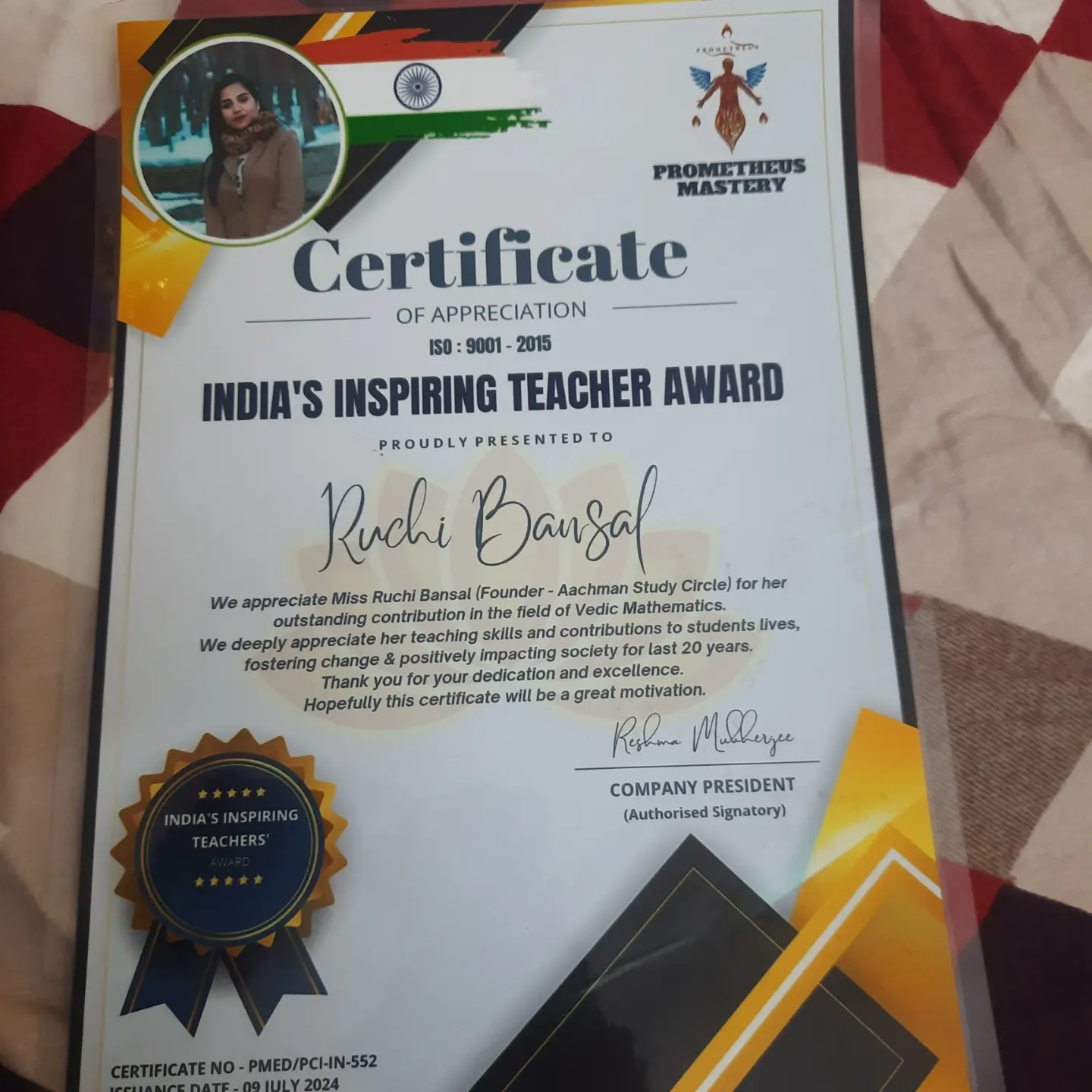





Hey ,
I am participating in
Edgroom's Educators Excellence Awards - 2024Here are the reasons why you should vote for me!
Discussion based
TLM is an acronym used for Teaching Learning Materials. The TLM is a spectrum of educational materials that teacher uses in the classroom to support specific learning objectives, to help students improve or reinforce special skills and sometimes to make learning fun.
Artificial intelligence (AI) can change the future of teachers by helping them work more efficiently and personalize learning for students
Give students a sense of control: Students are more likely to learn if they feel they chose to do so. This can increase their intrinsic motivation and encourage them to put more effort into their work. Set realistic goals: Set reasonable goals so that students don't feel pressured. Know your students: Getting to know your students can help you tailor instruction and inspire loyalty. Show the importance of what they're learning: If students don't see the relevance of what they're being asked to do, they won't be motivated. Foster competition: Competition can encourage students to learn better and make them more engaged. Use a variety of teaching activities: Use examples freely and a variety of student-active teaching activities. Be free with praise: Be free with praise and constructive in criticism. Help students evaluate their learning: Address student learning needs and negative behaviors from a place of trust and positive relationships.
Assess student ability Get a baseline reading of each student's current ability at the start of the school year. This can help you understand the abilities of your students and how to group them. Group students by ability Students with similar readiness and mastery levels can work together, which can help them learn at a comfortable pace. Encourage active learning Active learning experiences can help students develop critical thinking and independent learning skills. Provide feedback Feedback and support can help students monitor their progress and identify areas for improvement. Use technology Technology can be used to accommodate different learning abilities. Consider peer teaching Peer teaching can help improve students' critical thinking, motivation, and collaborative skills. Encourage creativity Creativity can help students represent their understanding in new ways that are personally meaningful. Practice active listening Active listening can help create a space where students can think more clearly about what they are saying and thinking.
System of education: Indian education system problems is heavily focused on rote learning, memorization, and theoretical knowledge. It does not emphasize on practical and skill-based learning, which is required in the current job market. Costly higher education: Higher education in India is becoming increasingly expensive, which is leading to a decline in the number of students pursuing higher education. Lack of infrastructure: Many schools in India lack basic infrastructure like classrooms, libraries, and laboratories, which affects the quality of education provided. Poor global ranking of institutes: Indian institutes lag behind in global rankings, which affects the perception of Indian education abroad. Gap between education provided and industry required education: Indian education system problems is not aligned with the needs of the industry, leading to a gap between the education provided and the skills required by the job market. Gender issues: Women in India still face significant barriers to education, especially in rural areas. Inadequate government funding: The government funding for education in India is insufficient, leading to a lack of resources and facilities in schools.
Work Experience
Aachman study circle - MYSORE
DirectorNov 2006 - Present
Started my teaching journey after 12 th class It became passion to me Internationally Vedic maths trainer International phonics trainer