





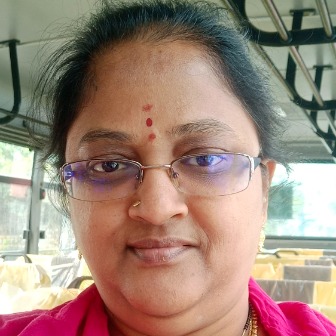
Hey ,
I am participating in
Edgroom's Educators Excellence Awards - 2024Here are the reasons why you should vote for me!
Recognized as the most conventional approach, the teacher-centered methodology is based on the idea that the teacher has the main responsibility in the learning environment. Teachers are in charge of the classroom and direct all activities.
These may include any textbooks and workbooks used in the classroom. For example, language arts classrooms almost always have literature textbooks, writing textbooks, and even vocabulary and spelling workbooks. More innovative materials may include charts, maps, videos, images, diagrams and flashcards.
By automating grading, planning and administrative work, artificial intelligence systems can free up educators' time and energy for increased student contact.
Give verbal praise for successful progress or accomplishment. Give personal attention to students. Provide informative, helpful feedback when it is immediately useful. Provide motivating feedback (praise) immediately following task performance
Present information in different formats to cater to all learning styles. For example, use written documents for reading/writing learners, videos for visual and auditory learners, and interactive sessions for kinesthetic learners.
schools often lack behind because of faulty techniques and strategies of instructional delivery. As teachers make use of age-old methods and rote learning techniques they fail to engage students purposefully.
Subjects Taught
General - Science - psychology (Teaching currently)
CBSEWork Experience
Ravindra global school - Padidempadu
TeacherMar 2018 - Present
Education
Ravindra global school - Padidempadu
CBSEGeneralApr 2023 - -