




The Future of Artificial Intelligence in Engineering
Artificial Intelligence is revolutionizing the field of engineering, promising a future filled with innovation and efficiency. As we stand on the cusp of a new era, it’s essential to explore the exciting developments AI is bringing to engineering and the transformative impact it will have on various industries.

Enhancing Design and Simulation: One of the most significant contributions of AI to engineering is in design and simulation. AI-driven algorithms can analyze vast datasets and perform complex simulations, allowing engineers to optimize designs, reduce prototyping costs, and accelerate the development process. With AI, engineers can explore countless design iterations and make data-driven decisions, leading to more efficient and sustainable solutions.
Predictive Maintenance and Reliability: AI’s predictive capabilities are poised to transform maintenance practices. Through continuous monitoring and data analysis, AI can predict when equipment or infrastructure is likely to fail, enabling proactive maintenance. This not only minimizes downtime but also extends the lifespan of critical assets, reducing operational costs and improving overall reliability.

Challenges and Ethical Considerations: While the future of AI in engineering is promising, it also raises important challenges and ethical considerations. Ensuring the responsible use of AI, addressing bias in algorithms, and protecting data privacy are crucial issues that engineers and society must grapple with as AI continues to advance. Balancing the benefits of automation with the need for human oversight remains a key challenge.
Automation and Robotics: The integration of AI into engineering processes is driving automation and robotics to new heights. Autonomous robots and machinery equipped with AI can perform intricate tasks with precision, from manufacturing to construction. This not only improves efficiency but also enhances safety by reducing the need for human intervention in hazardous environments.
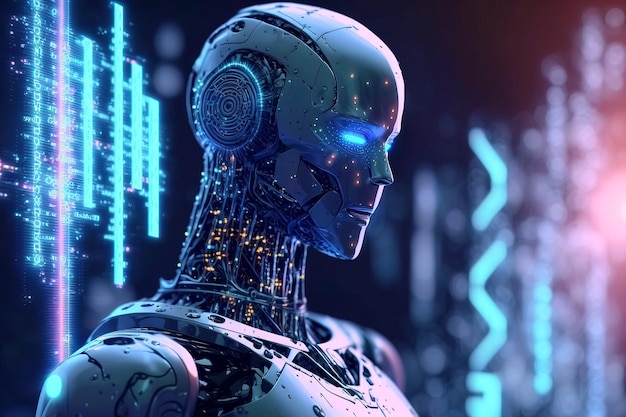
Conclusion: The future of Artificial intelligence in engineering is poised to usher in an era of unprecedented innovation and efficiency. AI’s impact on design, predictive maintenance, automation, and robotics promises to reshape how we approach engineering challenges. However, it’s essential to navigate the ethical and practical challenges that come with this transformative technology to ensure a future where AI serves as a powerful tool for engineers and benefits society as a whole.
Regards:
Malla Kumar Naidu,
21KD1A0588.

ELCSLAB @ Lendi
View Details
 Like
Like 6 Comments
 Repost

You may also like


VENKATESH PANYAM
Published 7d+
JEE Mains-2019-Physics Analysis
To succeed in any competitive exam students should know how the questions were framed in the exam. To understand this every teacher recomends the students to solve the previous exam papers.When a student

EdGe: Your Academic Co-pilot
Published 7d+

Study Path, Courses, Salary & Complete ISRO–NASA Roadmap
The dream of going to space has fascinated generations. From watching rocket launches to imagining life beyond Earth, many students aspire to become astronauts. But this journey is not just exciting—it


Dr. Ravi Saripalle
Published 7d+
Confluence of Declining Math Ability
"Confluence of Declining Math Ability, Mobile Device Usage in Child Development, and AI as Future Teachers: Exploring the Changing Landscape and Implications for the World"Dear Friends and

EdGe: Your Academic Co-pilot
Published 7d+
Ultimate Guide to B.Tech Courses in Andhra Pradesh
⚙ Core Engineering Branches CSE – Computer Science and Engineering Focuses on programming, algorithms, computer systems, and software development. ➤ Opportunities: Software engineer,


Prasanth
Published 7d+
A demonstration of Influencing people without a formal Authority through CORE values
Recently, I read a book "Project Management for the Unofficial Project Manager" by Suzette Blakemore, Kory Kogon, James Wood. It stresses on the mastery of four foundational behaviours to be


The Art of Teaching
Published 7d+
Dear Parents: Why Exam Scores Don’t Define Your Child’s Future
A Teachers PleaAs exam season approaches, I know how anxious and hopeful you are for your child to perform well. It’s natural to want them to succeed, to see their hard work pay off, and to believe

Dr. Ravi Saripalle
Published 7d+
Brilliance vs. Reliability: Which is More Important in the Contemporary World?
Dear Friends,Recently, the famous Hindi actor Sunil Shetty shared a post reflecting on the value of reliability over raw talent or brilliance, drawing from his experiences in the film industry and
EdGe: Your Academic Co-pilot
Published 7d+
Civil Engineering: A Guide for Aspiring Students
What is Civil Engineering?Civil engineering is a core field of engineering that deals with the planning, design, construction, and maintenance of the built environment. This includes infrastructure

VENKATESH PANYAM
Published 7d+
Finding a Mentor: Your Guide to Growth and Success
Dear Students,In the journey of self-development and achieving excellence, one of the most powerful assets you can have is a mentor—a person who acts as a role model, advisor, and friend. Mentorship

EdGe: Your Academic Co-pilot
Published 7d+
B. Tech (4 years) courses offered at IITs
What are the courses offered at IITsThe 23 IITs in India offer variety of courses for the students in different streams. Some of the IITs offer courses like Aerospace Engineering, Agricultural Engineering,

EdGe: Your Academic Co-pilot
Published 7d+
Sri Venkateswara Institute of Medical Sciences (SVIMS), Tirupati: In-depth Overview
Sri Venkateswara Institute of Medical Sciences (SVIMS), located in Tirupati, Andhra Pradesh, is a premier medical institution established in 1993. Conceived on the lines of the All India Institute of Medical
Related Blogs

ELCSLAB @ Lendi
Published 7d+
The Future of Artificial Intelligence in Engineering
Introduction: The ever-evolving landscape of technology, the role of artificial intelligence (AI) in engineering is becoming increasingly prominent. This blog explores the transformative

ELCSLAB @ Lendi
Published 7d+
The Future of Artificial Intelligence in Engineering
Introduction:In the world of technology and innovation, artificial intelligence (AI) has emerged as a powerful force, reshaping various industries. One domain where AI is making remarkable strides


Swetha Konkyana
Published 7d+
The Future of Artificial Intelligence in Engineering.
Title: The Future of Artificial Intelligence in EngineeringIntroduction: In the evolution of technology,

ELCSLAB @ Lendi
Published 7d+
The Future of Artificial Intelligence in Engineering
Title: The Future of Artificial Intelligence in EngineeringIntroduction: Now a days the world is running towards AI and Artificial Intelligence (AI) has emerged as a transformative technology

ELCSLAB @ Lendi
Published 7d+
The Future of Artificial Intelligence in Engineering
Title: The Future of Artificial Intelligence in Engineering Introduction Artificial Intelligence (AI) is rapidly changing the landscape of various industries, and engineering is

ELCSLAB @ Lendi
Published 7d+
The Future of Artificial intelligence in Engineering
TITLE: THE FUTURE OF ARTIFICIAL INTELLIGENCE IN ENGEENERING Introduction:Artificial Intelligence (AI) has transcended the realm of science fiction and is now reshaping various industries,